
Father's Day History: How One Woman's Idea Became a Global Tradition of Sending Love Across Distance
*Published on June 4, 2026*
Father's Day is seventeen days away, and if you're anything like most people, you're somewhere between "I should really figure out what to send him" and "wait, how did this holiday even start?" The second question is worth sitting with for a minute — because the origin of Father's Day is a genuinely good story, and knowing it changes how the day feels.
It didn't come from a greeting card company. It didn't emerge from some government committee deciding to balance out Mother's Day on a calendar. It came from one woman in Spokane, Washington, who looked at her father and thought: someone should make this official.
Here's how it happened.
One Woman, One Father, One Idea
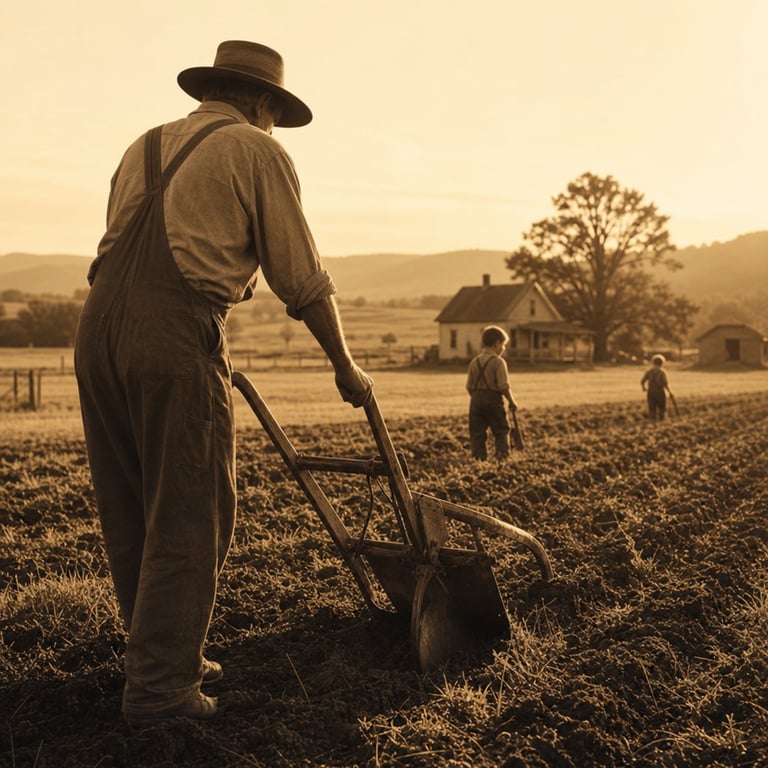
In 1909, a woman named Sonora Smart Dodd was sitting in church listening to a sermon about Mother's Day — Anna Jarvis had launched that observance just a year earlier, in 1908, and it was already spreading fast. Sonora's mind drifted to her own father, William Jackson Smart.
William Smart was a Civil War veteran who had done something quietly extraordinary: after his wife died in childbirth, he raised six children on his own on a farm in rural Washington State. No second marriage to outsource the parenting. No institutional support. Just a man who decided his children needed a home and a father, and who built both from scratch.
Sonora thought about all of that while the Mother's Day sermon played out, and she asked a simple question: why isn't there a day for fathers?
She brought the idea to Spokane's Ministerial Alliance and lobbied for June 5th — her father's birthday. The Alliance asked for a little more time to prepare, and on June 19th, 1910, Spokane held what is widely recognized as the first official Father's Day celebration. Sonora spent the day visiting sick and disabled fathers around the city, delivering roses: red ones for living fathers, white ones for those who had passed.
It was a local event. Nobody knew it would become a global one.
The Long Road to a National Holiday
You might assume that once a holiday gets its first celebration, official recognition follows quickly. It didn't — not for Father's Day.
President Woodrow Wilson expressed support in 1916 when he pressed a button in Washington to unfurl a flag in Spokane during a Father's Day event. Calvin Coolidge recommended it be observed nationally in 1924. But Congress resisted formalizing it for decades, partly because lawmakers worried it would turn into another commercial occasion — the kind of thing where retailers profit more than families actually connect. (Whether that concern proved well-founded is a question worth leaving open.)
It wasn't until 1966 that President Lyndon B. Johnson signed a presidential proclamation designating the third Sunday in June as Father's Day. And it took another six years after that — 1972, under President Richard Nixon — for it to become a permanent national holiday in the United States.
Sixty-two years from Sonora's first church-service idea to a signed law. That's a long time for a simple, human observation to become official.
How Father's Day Spread Around the World
One of the more interesting things about Father's Day is how unevenly — and sometimes independently — it took hold across different countries.
Western Adoptions: Following the American Calendar
In the United Kingdom, Father's Day landed on the same third Sunday in June, largely through American cultural influence after World War II. Australia and Canada followed the same pattern. The holiday arrived quietly in these places, without much ceremony — it was absorbed into the calendar the way most imported customs are, through commerce and imitation more than official declaration.
In Germany, *Vatertag* (Father's Day) falls on Ascension Day, a moveable Christian feast that typically lands in May — and it has a very different character, historically involving men going on outdoor excursions with wagons of beer. Less carnations, more countryside.
Asia's Own Interpretations
The holiday's spread through Asia is where things get particularly interesting.
In Thailand, Father's Day is celebrated on December 5th, the birthday of the late King Bhumibol Adulyadej (Rama IX), who was regarded as a father figure to the nation. Yellow flowers — specifically *Dok Phuttaruksa* — are gifted rather than roses.
In Taiwan, Father's Day is observed on August 8th, because "8/8" sounds like *baba* (爸爸, meaning father) in Mandarin. It's a wordplay holiday, which is genuinely charming — the kind of thing that makes you appreciate how culture shapes even the dates we choose to commemorate.
The Philippines follows the June third-Sunday calendar, and it's observed warmly in a culture where family — and the role of fathers within it — carries deep social weight. For Filipino families spread across the world, whether healthcare workers in Canada or caregivers in the Gulf, it's often a day for long video calls and finding ways to send something home.

South Korea observes Parents' Day on May 8th rather than a separate Father's Day — a combined celebration that reflects the Confucian emphasis on honoring both parents together, not in isolation.
What's notable across all of these variations is that the impulse behind them is the same: acknowledge the men who raised you. The date and the flowers change. The feeling doesn't.
What Father's Day Means When You're Far From Home — and Need to Send a Gift Overseas
In 2026, Father's Day is both simpler and more complicated than it was in Sonora Dodd's time.
Simpler because the sentiment is clearer than ever: you want your father — or your grandfather, your stepfather, the man who showed up when he didn't have to — to know you're thinking about him. Complicated because a lot of us are thinking about fathers from across an ocean, or an international dateline, or a 14-hour time difference.
For diaspora communities especially, the holiday can carry a particular weight. A Korean-American in Los Angeles whose dad is in Seoul. A Filipino family in Vancouver whose father hasn't left Cebu in years. A second-generation immigrant anywhere who calls home and isn't quite sure what to say, but knows June 21st feels like a day to say something.
Sonora Smart Dodd's original Father's Day wasn't about buying things — it was about presence and acknowledgment. She drove around Spokane delivering roses to fathers who might not otherwise have felt remembered. The gesture mattered more than the object.
That impulse translates across distance. A Starbucks gift card that arrives in Seoul so your dad can have his afternoon coffee on you. A Jollibee gift sent to your father in Manila so the family Sunday lunch is covered. A digital gift card to his favorite local shop so he can finally order that thing he's been putting off buying for himself. None of these are grand gestures. They're small acts that say: I know where you are, and I was thinking of you on this particular day.
Sending a Gift Card Internationally Has Actually Gotten Easier
For those figuring out how to send a gift card internationally or get something overseas without the usual logistics headache, the options in 2026 are genuinely better than they were even a few years ago. No customs forms, no "it got lost in the mail," no two-week shipping anxiety. Cross-border digital gift platforms have made it far less painful — you can send something to Seoul or Manila or Cebu on a Tuesday afternoon and have it arrive the same day.
One service that focuses specifically on this kind of cross-border gifting is SodaGift, which handles digital gift delivery across Korea, the Philippines, and a growing list of countries.
Sending a Gift Overseas for Father's Day: A Closing Thought
There's something worth sitting with in the fact that Father's Day took over six decades to become official in the country where it started. Sonora Dodd spent much of her adult life advocating for it, left Spokane for a period, and when she returned, found the observance had faded. She kept pushing anyway.
When Father's Day finally became law in the United States in 1972, Sonora Smart Dodd was 90 years old. She lived to see it happen.
That's the kind of origin story that puts a different texture on an otherwise ordinary June Sunday. This year, with Father's Day falling on June 21st, there are fathers in Spokane and Seoul and Cebu and every city in between who will be remembered — or not — depending on whether someone thought to reach out.
Sonora thought to reach out. For those of us separated from our fathers by an ocean or a continent, the question of how to send a gift overseas has never had more practical answers than it does in 2026. The harder question — whether we'll take the time to do it — is still entirely up to us.
Seventeen days is enough time.